
When engineers and product managers reach the prototyping or production stage, one of the most common questions they face is: Should I use sheet metal fabrication or CNC machining?
Both processes are fundamental to modern manufacturing, and both can produce high-precision metal parts. But they serve different purposes, suit different materials, and carry different cost implications. Choosing the wrong one can mean higher costs, longer lead times, or a part that doesn't perform as intended.
This guide breaks down the key differences between sheet metal fabrication and CNC machining across the factors that matter most.
What Is Sheet Metal Fabrication?
Sheet metal fabrication is a broad term covering several processes that shape flat metal sheets into parts. Common operations include:
- Laser cutting — using a high-power laser to cut precise shapes from sheet metal
- CNC bending (press braking) — forcing sheet metal along a straight axis to create angles and folds
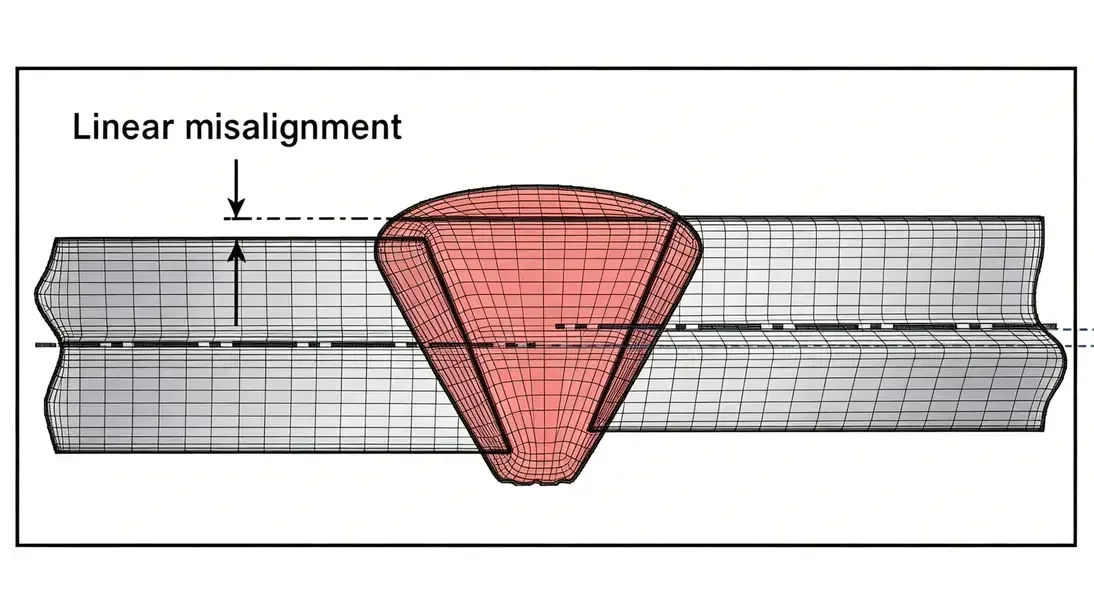
- Welding — joining separate sheet metal pieces together
- Surface finishing — powder coating, anodizing, or plating for corrosion resistance and aesthetics
Sheet metal is typically between 0.5mm and 6mm thick, though heavier gauges exist. Materials commonly used include steel, stainless steel, aluminum, brass, and copper.
The process starts with a flat sheet and progressively shapes it into a 3D part — often requiring multiple operations and joining steps.
What Is CNC Machining?
CNC (Computer Numerical Control) machining is a subtractive manufacturing process where pre-formed solid blocks or rods of material are cut and shaped by computer-controlled tools. The two most common types are:
- CNC Milling — rotating cutting tools remove material from a stationary workpiece
- CNC Turning — the workpiece rotates while a stationary cutting tool shapes it
CNC machining works with a wider range of materials including metals, plastics, and composites. It excels at producing parts with complex geometries, tight tolerances, and intricate features like pockets, threads, and curved surfaces.
Key Differences at a Glance
| Factor | Sheet Metal Fabrication | CNC Machining |
|---|---|---|
| Starting Material | Flat metal sheets | Solid blocks, bars, or castings |
| Process Type | Forming, cutting, joining | Subtractive cutting |
| Thickness Range | 0.5mm – 6mm typically | No practical limit |
| Complexity | Moderate; best for primarily flat parts with bends | High; very complex 3D geometries |
| Tolerances | Generally ±0.1mm–0.5mm | ±0.01mm–0.05mm achievable |
| Wall Thickness | Limited by material formability | Can be precisely controlled |
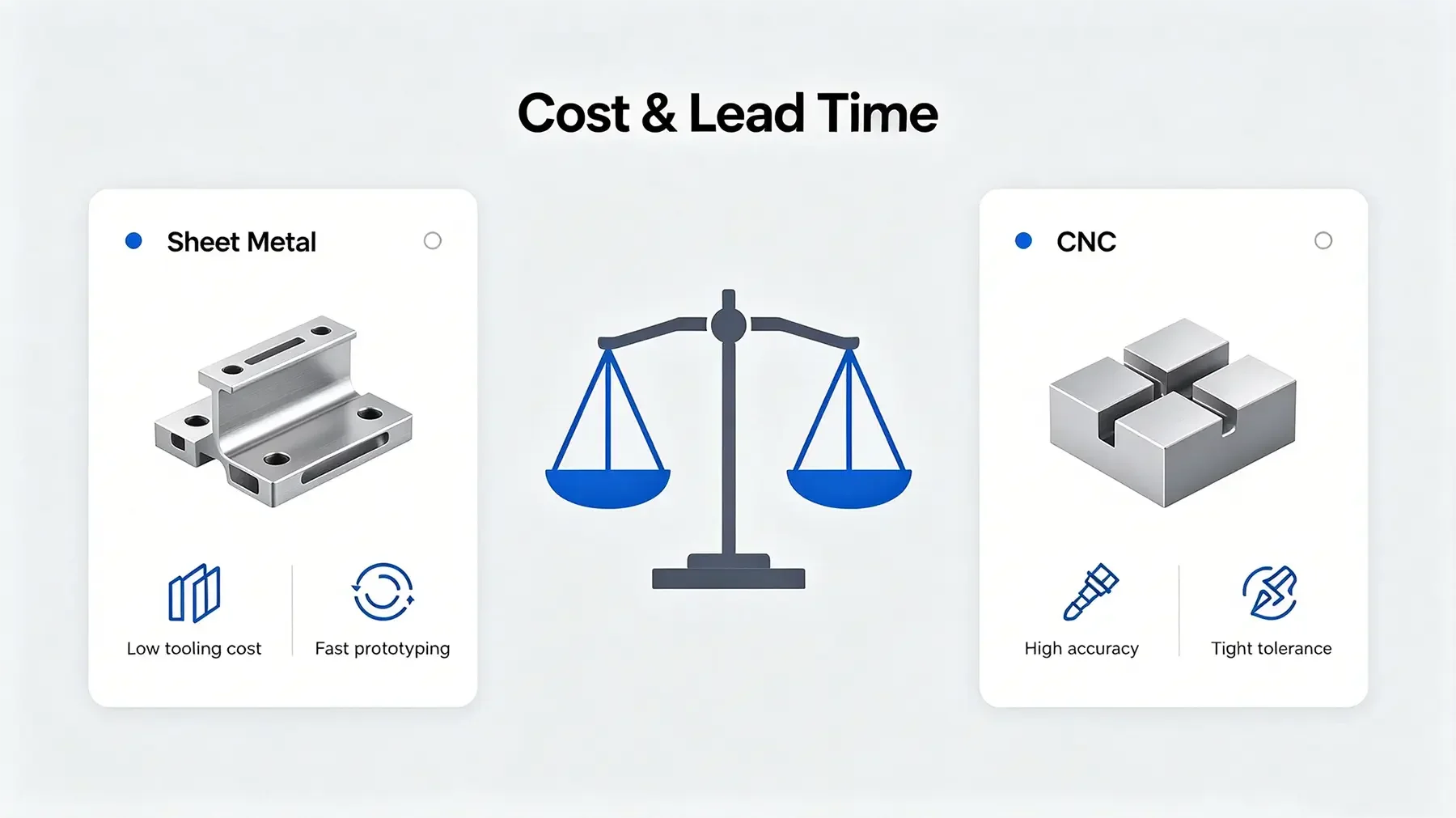
| Typical Lead Time | Faster for sheet-based parts | Longer, especially for complex 3D parts |
| Cost at Volume | Very cost-effective at high volume | Economical for low-to-medium volume |
When to Choose Sheet Metal Fabrication
Sheet metal is typically the better choice when:
- Your part is fundamentally flat or bent — Enclosures, brackets, panels, chassis, and housings are classic sheet metal applications. If your design can be "unfolded" into a flat pattern, sheet metal is likely the right route.
- You need to reduce weight — Sheet metal parts can be designed with strategic cutouts and bends to maximize strength-to-weight ratio.
- Surface area matters — If you need a large, flat surface (a base plate, cover, or mounting panel), sheet metal is more efficient.
- Production volume is high — Once tooling (dies for bending, punch press tooling) is set up, sheet metal production is very fast and cost-effective.
- You need integrated joining — Weld nuts, PEM® inserts, and tapped holes can be incorporated directly into sheet metal parts during fabrication.
Common sheet metal applications:
- Electrical enclosures and control cabinets
- Medical equipment housings
- Automotive body panels and structural brackets
- Architectural metalwork
- HVAC ductwork and components
When to Choose CNC Machining
CNC machining is typically the better choice when:
- Tolerances are extremely tight — If your part requires precision within ±0.05mm or better, CNC machining is the standard.
- The geometry is complex in all three dimensions — Undercuts, complex contours, internal cavities, and multi-axis surfaces are where CNC machining shines.
- You need a wide range of material options — CNC can work with tool steels, titanium, engineering plastics, and other materials that aren't commonly available in sheet form.
- Your part is small or thick — CNC machining doesn't struggle with thick sections the way sheet metal forming does.
- You're making a prototype before sheet metal tooling — Machined prototypes can validate design and fit before committing to sheet metal tooling costs.
Common CNC machining applications:
- Precision shafts, gears, and fasteners
- Aerospace and automotive engine components
- Mold and die inserts
- Functional prototypes with tight fit requirements
- Optical and medical device components
Can You Use Both?
Absolutely. In fact, many finished products combine sheet metal and CNC machined parts. A typical scenario:
- The outer enclosure or frame is made from sheet metal, providing structural support and protection
- Internal mounting brackets, shafts, and other precision components are CNC-machined to achieve the required tolerances.
At our facility, we offer both sheet metal fabrication and CNC machining under one roof, which means we can advise you on the most cost-effective approach for your specific design — and even handle mixed-material assemblies in a single production run.
How to Decide: A Simple Checklist
Use this quick checklist to guide your decision:
- ☑️ Is the part fundamentally flat with bends and cutouts? → Sheet metal
- ☑️ Does it require precision better than ±0.1mm? → CNC machining
- ☑️ Is the production volume in the thousands? → Sheet metal
- ☑️ Does the design include complex 3D features, threads, or undercuts? → CNC machining
- ☑️ Do you need large surface areas or structural panels? → Sheet metal
- ☑️ Does the material need to be a specialty alloy not available as sheet? → CNC machining
Conclusion
There is no universally "better" process — only the right process for your specific application. Sheet metal fabrication and CNC machining are complementary, not competing, technologies.
Involving your manufacturer early in the design phase can significantly reduce costs and lead time, regardless of which process you choose.
Need help evaluating your next project? Contact our engineering team for a free design-for-manufacturing review.